
When applying for accommodations on the LSAT due to anxiety, ADHD, or other disability, a comprehensive psychological report is often a needed part of the process. This document not only provides a clinical diagnosis but also serves as the foundation for demonstrating the need for specific accommodations, such as extended time or a quiet testing environment.
But what exactly goes into a psychological report? How does it address your unique challenges, and what do testing boards like the Law School Admission Council (LSAC) look for when reviewing your request?
In this blog post, we’ll break down the essential components of a sample psychological report for a student with anxiety that was tailored for LSAT accommodations. From background information and clinical interviews to test results and professional recommendations, we’ll explain what evaluators include to create a strong, evidence-based case for accommodations. Whether you’re navigating this process yourself or assisting someone who is, understanding these details can help set you on the path to success.
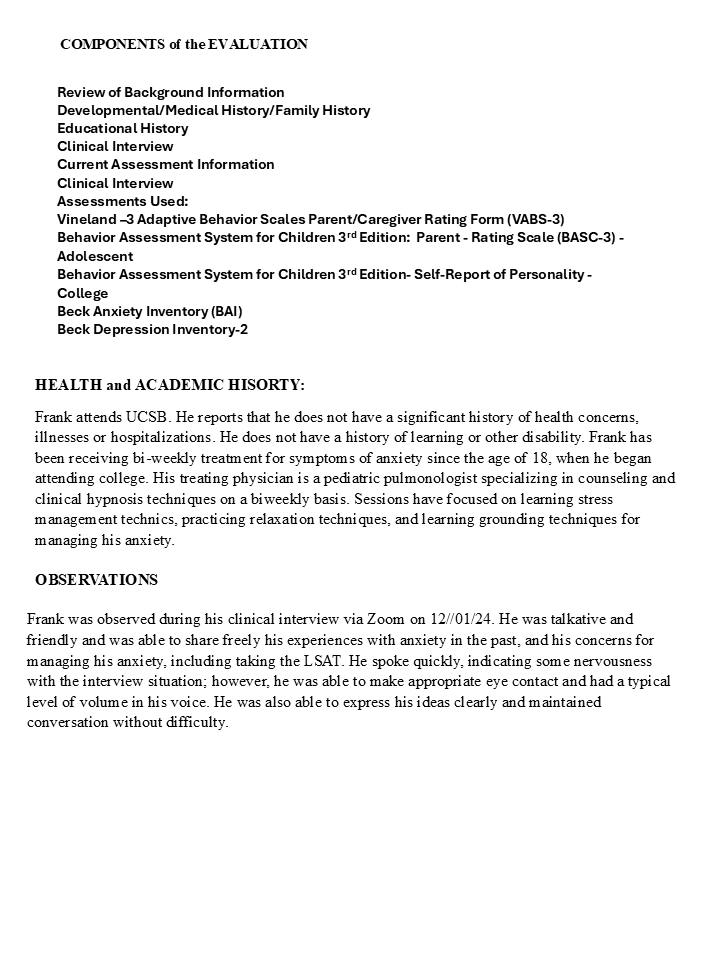
Here’s a list of the 10 essential components of a psychological evaluation report:
1. Identifying Information
- Client’s name, date of birth, and other demographic details, including information about the evaluator, incase they need to be contacted.
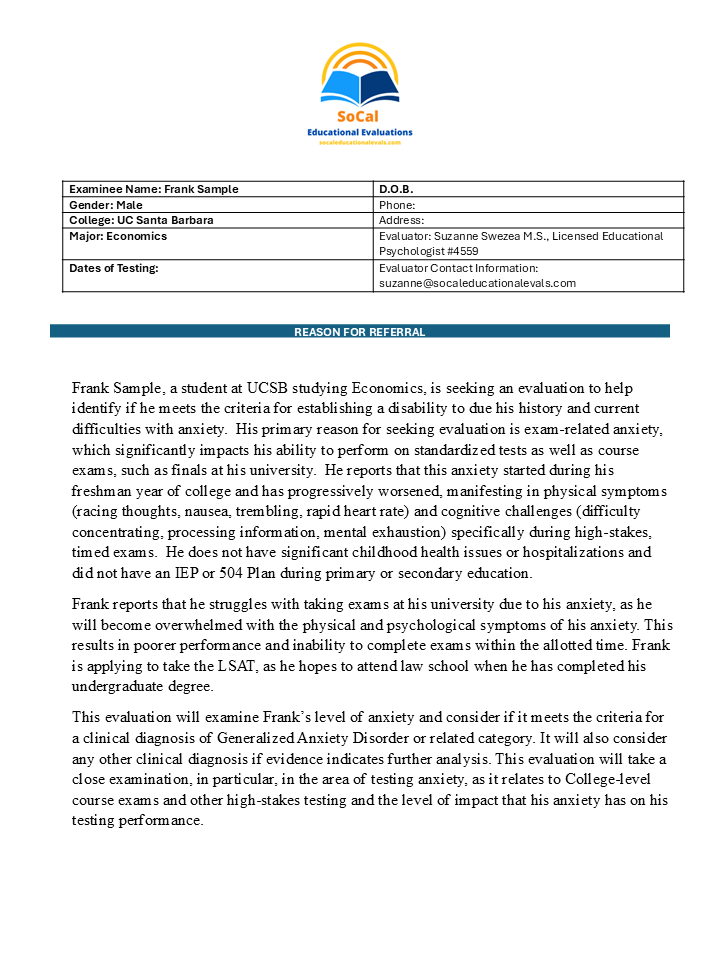
2. Reason for Referral
- A brief explanation of why the evaluation was conducted (e.g., to assess the impact of anxiety on test performance and determine the need for LSAT accommodations).
- The evaluator should write about what brought the client in for an evaluation. Indicating that you, the client, is looking for testing accommodations is perfectly fine. Honestly and transparency is the best policy, as having a disability, whether Anxiety, Dyslexia, or ADHD, does not mean that you cannot take the exam or do not deserve to go to law school. It means that, while you are qualified, hard-working, and intelligent, you have an obstacle to overcome that impacts your testing performance. The reason for referral should paint a picture of what is going to be evaluated and discussed throughout the report. Kind of like an abstract.
3. Background Information
- Educational history and academic performance.
- Relevant medical and mental health history.
- Previous diagnoses and treatments.
- Past experiences with standardized testing and accommodations, if any.
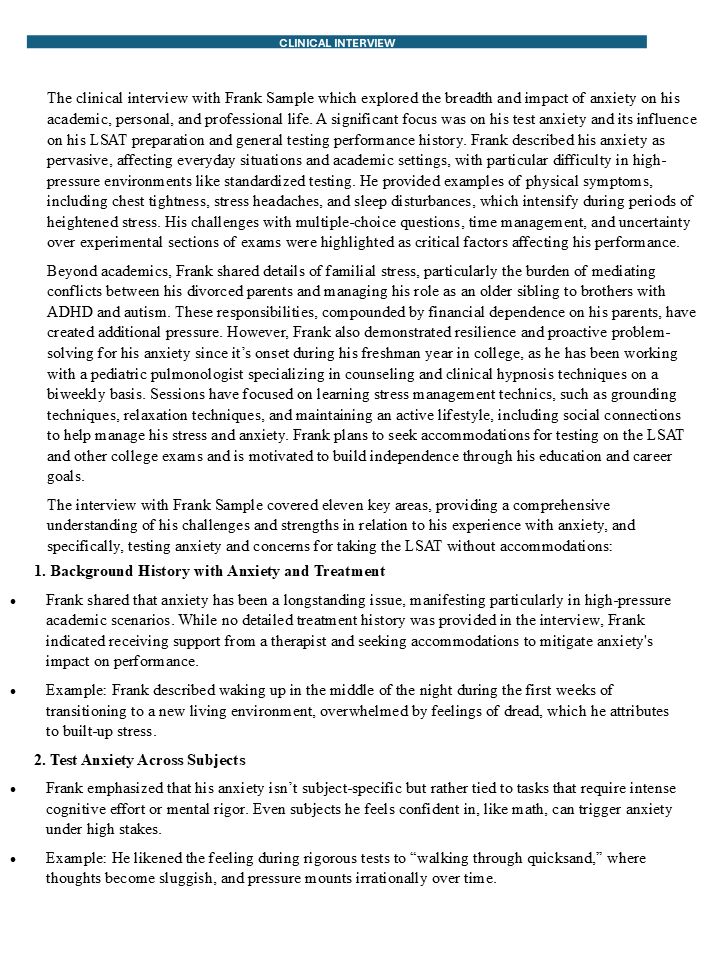
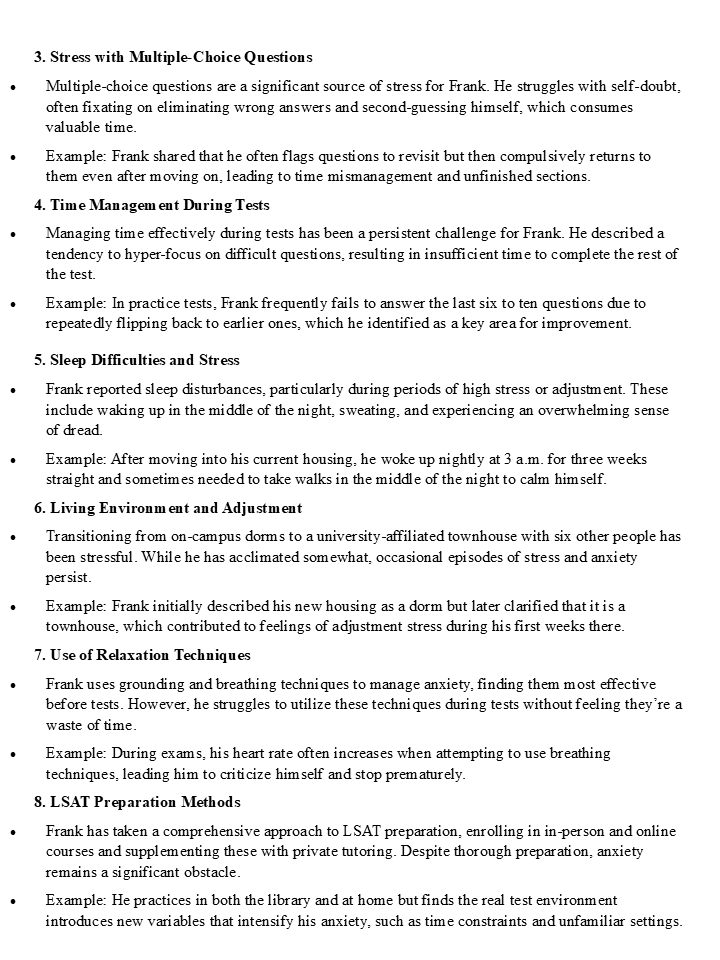
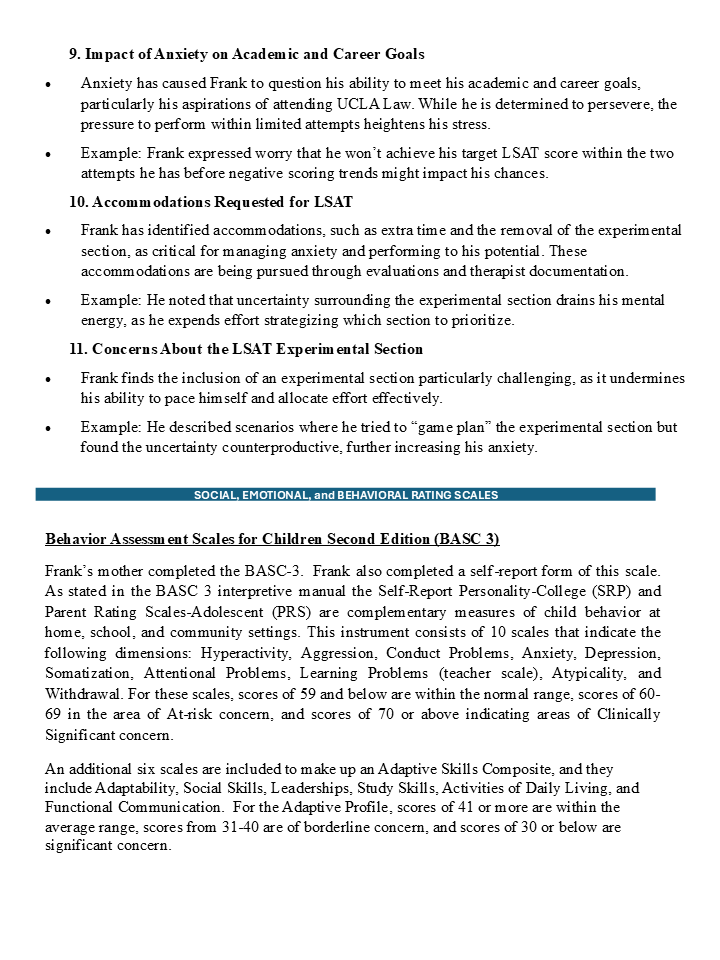
4. Clinical Interview
The clinical interview is a cornerstone of any psychological evaluation, offering invaluable insight into the individual’s experience with anxiety and its impact on test-taking. This structured conversation allows the evaluator to gather detailed information about the onset, frequency, and severity of symptoms, as well as the specific challenges faced in academic and testing environments. It also provides context for understanding the individual’s history, including any past diagnoses, treatments, or accommodations. A thorough clinical interview should explore key areas such as stressors, coping strategies, and the functional impact of anxiety on concentration, performance, and overall well-being, ensuring that the evaluation captures a comprehensive picture of the individual’s needs.
5. Behavioral Observations
- A section on any observations during testing sessions or clinical interviews should include observations on the client’s behavior, mood, and engagement during the evaluation.
6. Assessment Tools Administered
- A list of psychological and cognitive tests used, which may include:
- Self-report anxiety inventories (e.g., Beck Anxiety Inventory, State-Trait Anxiety Inventory).
- Measures of executive functioning (e.g., working memory, attention).
- Academic performance tasks, if applicable.
7. Test Results and Interpretation
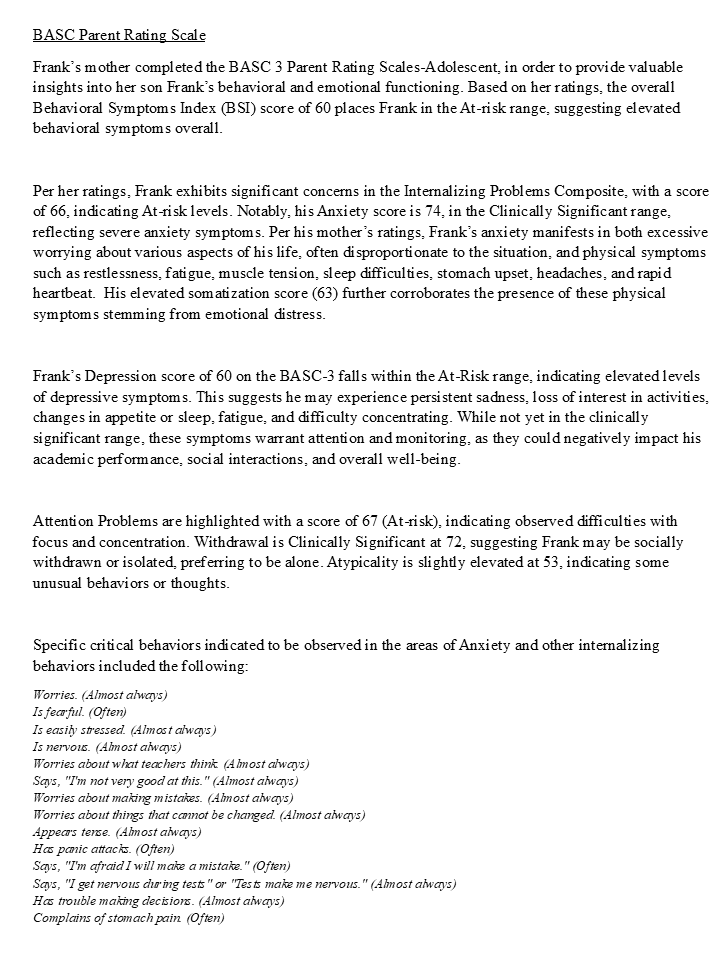
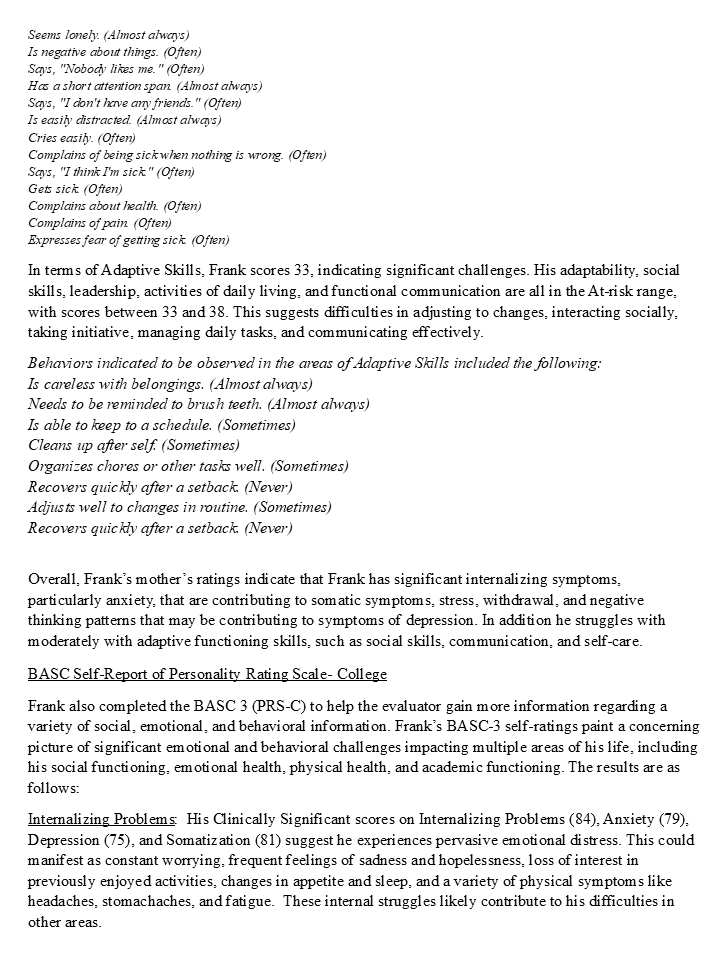
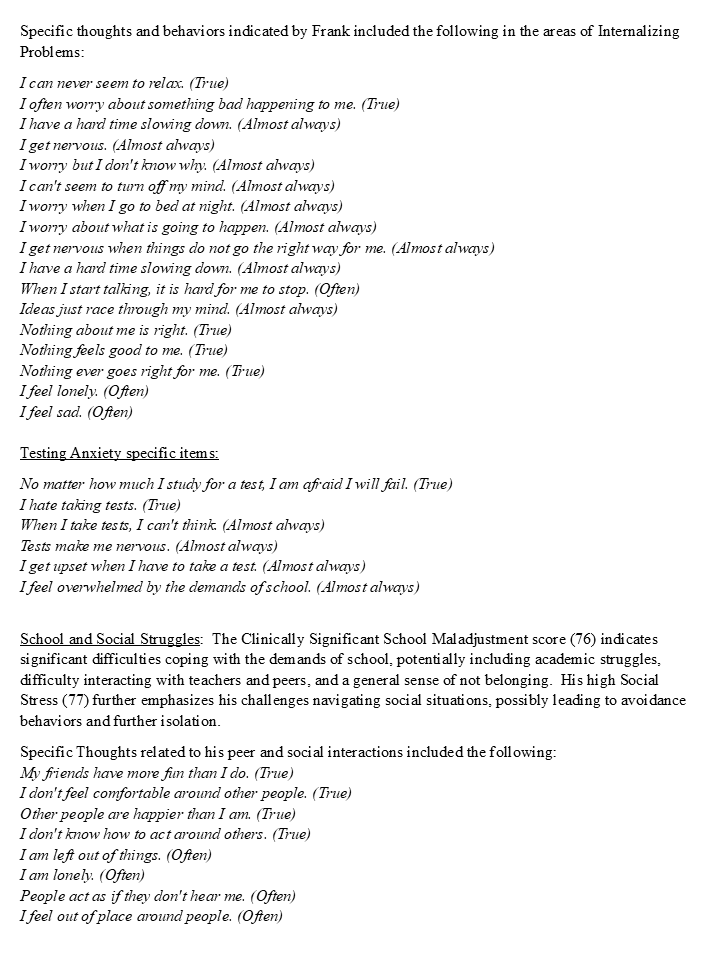
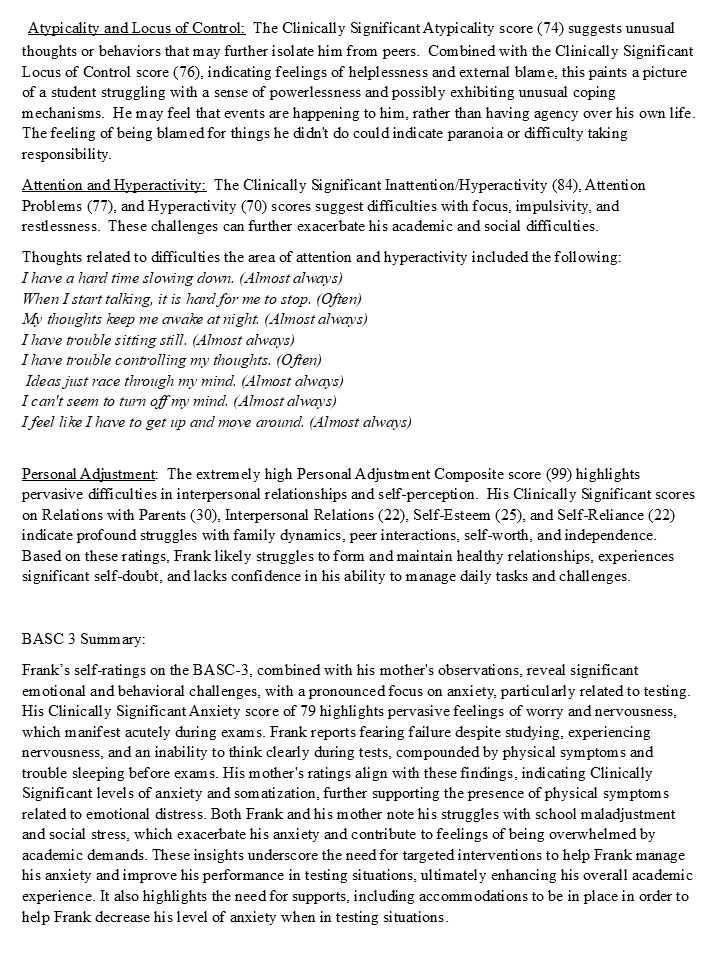
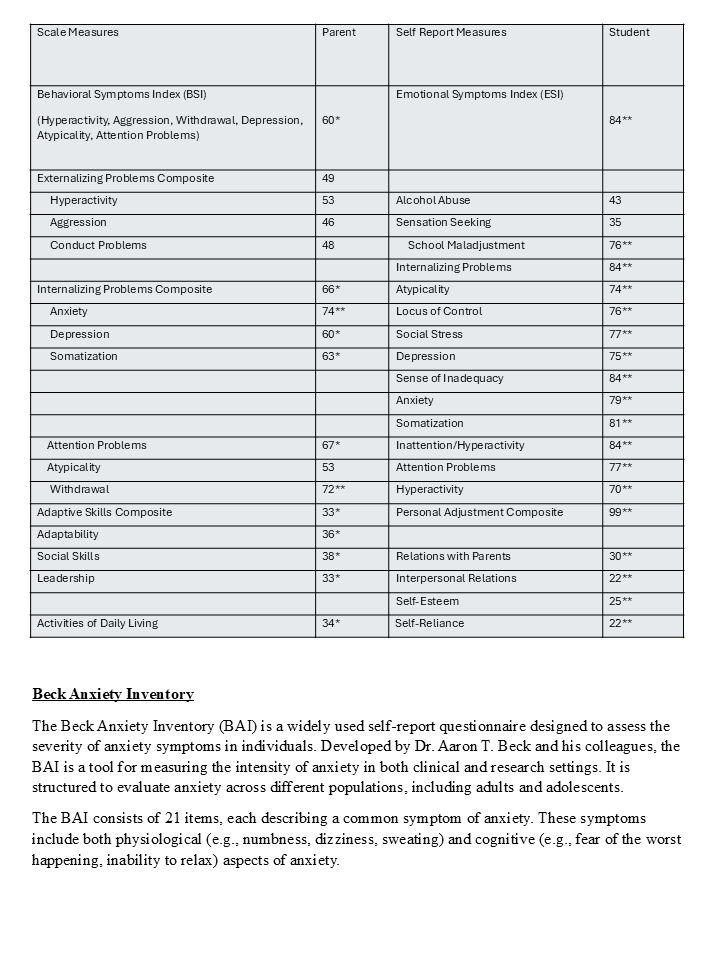
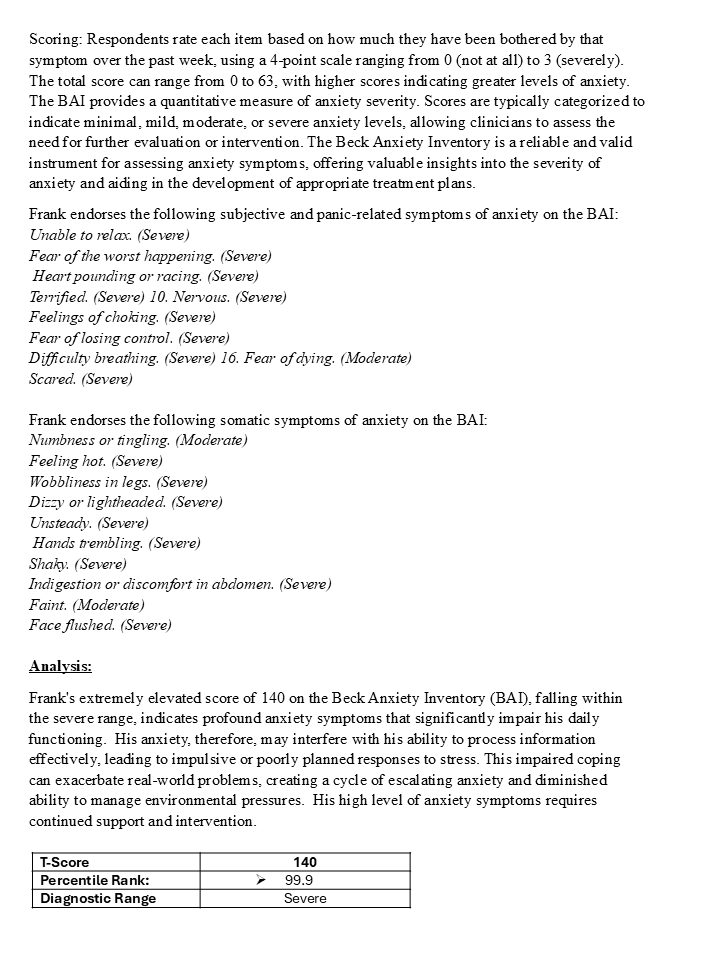
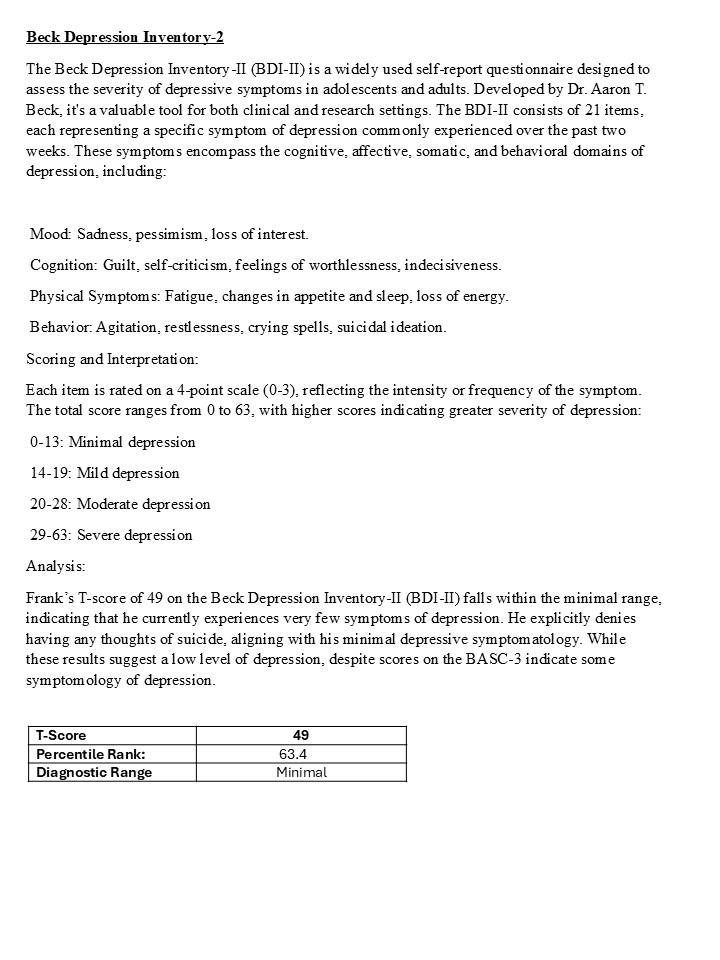
- Administering assessment tools, tests, and rating scales tailored to the presenting problem is essential for obtaining an accurate and comprehensive understanding of an individual’s challenges. For anxiety-related evaluations, this involves using multiple measures that capture various aspects of the condition, such as self-reported symptoms, behavioral manifestations, and cognitive impacts. Tools like anxiety inventories, executive functioning assessments, and academic performance tasks provide a multidimensional view, helping to differentiate anxiety from other potential issues and quantify its impact on test-taking or daily functioning. Utilizing multiple measures ensures that the evaluation is thorough, minimizes bias, and strengthens the validity of the findings, ultimately supporting well-informed recommendations for accommodations or interventions.
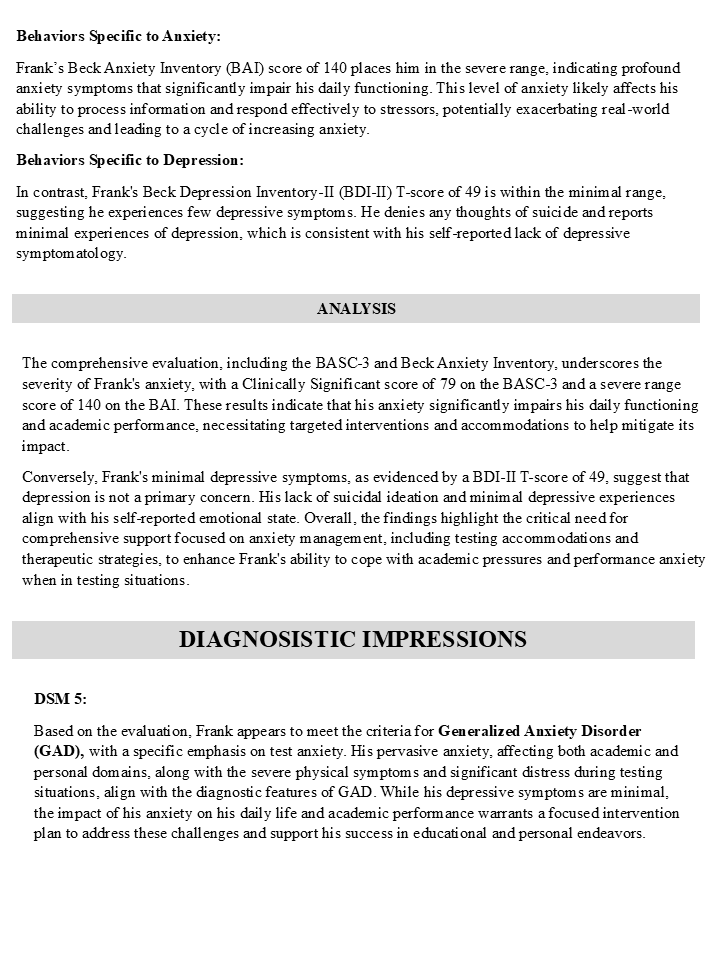
Here are several pages from the Sample Report that show the details and analysis that should be conducted with each assessment tool administered. Ruling out diagnosis, such as depression in the case of this client, is as important as ruling in a diagnosis.
8. Diagnostic Impressions
- An Analysis of the results with formal diagnosis based on the DSM-5-TR provides a standardized framework for identifying and describing the individual’s anxiety disorder, ensuring it meets established clinical criteria. This diagnosis serves as the foundation for linking the individual’s symptoms—such as excessive worry, difficulty concentrating, or physical tension—to the specific challenges they face during test-taking. By clearly articulating how these symptoms impair performance, such as through slower processing speed, heightened distractibility, or panic responses in high-pressure situations, the evaluator can demonstrate the need for accommodations to mitigate these barriers and ensure equitable access to the testing environment.
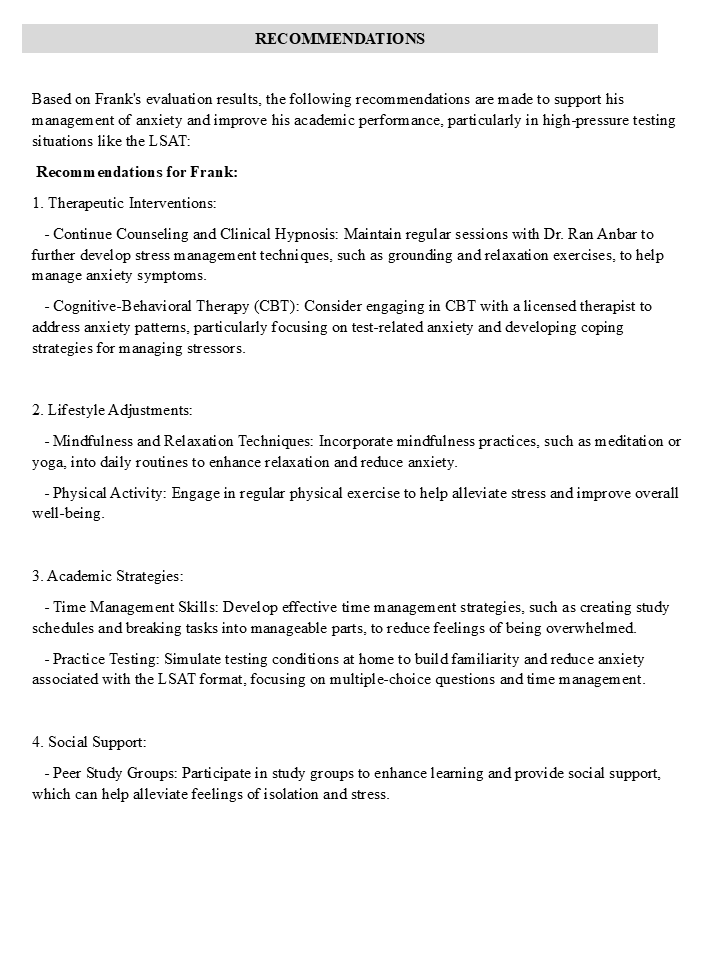
9. Recommendations for Accommodations
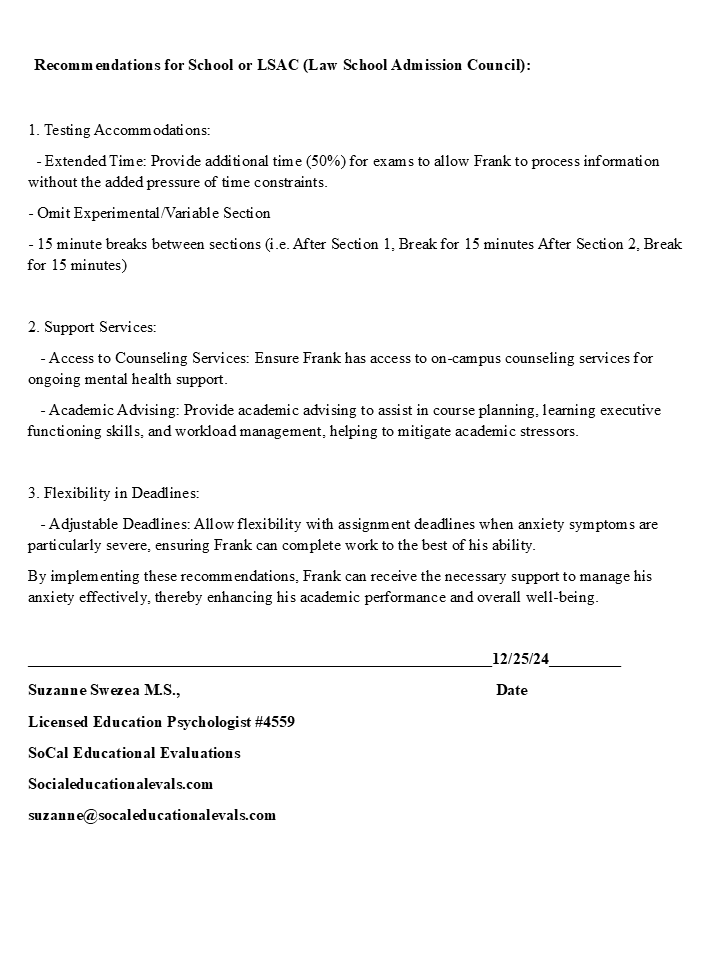
- Clear justification for each accommodation requested, such as:
- Extended time.
- Small group or individual testing environment.
- Additional breaks.
- Access to calming tools (e.g., noise-canceling headphones).
10. Examiner’s Credentials and Signature
- Full name, title, license number, and signature of the evaluator.
11. Your Examiner then also Completes the Qualified Professional Form
Once the psychological evaluation is complete, the qualified professional who conducted the assessment will also complete the Qualified Professional Form required by the testing organization. This form serves as a summary of the evaluator’s credentials, the evaluation process, and the findings. It ensures that the recommendations are supported by a licensed and experienced professional with expertise in assessing the specific condition, such as anxiety. The form typically requires details about the diagnosis, its functional impact, and the rationale for the requested accommodations. Completing this form accurately and thoroughly is essential, as it provides the testing organization with a clear and concise overview of the evaluation’s results, reinforcing the need for accommodations.
If you live in California and are in need of testing accommodations for the LSAT or other Exam…
If you live in California and need testing accommodations for the LSAT or another exam, obtaining a comprehensive psychological evaluation is the first step. At SoCal Educational Evaluations, we specialize in providing thorough assessments for individuals seeking accommodations for standardized tests, including the LSAT, GRE, and professional licensing exams. Our evaluations are tailored to your unique needs, focusing on conditions such as anxiety, ADHD, or learning disabilities, and are designed to meet the requirements of testing organizations. With both in-person and virtual testing options available throughout California, we make the process accessible and convenient, ensuring you have the documentation needed to support your request for accommodations.