
1. Create a Consistent Homework Routine
Establish a set time and place for homework each day. Children with ADHD or other challenges thrive on structure and predictability. A consistent routine helps them mentally prepare for the task, reducing anxiety or resistance. Choose a quiet, well-lit area free from distractions, and stick to the schedule as closely as possible.
What time is best for homework?
If possible, make homework time RIGHT after school and before extracurricular activities. Yes, a 15 minute break with a snack is totally fine, but if you give too long of a break, it will become much harder as they become more relaxed and distanced from the school day. Doing homework right after school, or at least before dinner, also prevents kids from getting the full effects of feeling more and more tired as the evening goes on. Plus, you can better use reinforcements (a.k.a. bribery) of technology time, dessert, or other tangible for completion of their homework.
2. Break Tasks into Smaller Steps

Large assignments can feel overwhelming for children with executive functioning difficulties. Break homework into smaller, manageable chunks, and focus on one step at a time. Use visual aids like checklists or timers to show progress, which can help boost their sense of accomplishment. Start small, even 10 minutes on, 10 minutes off on a break activity. While this will make homework time take longer, starting in small increments will help your child feel more successful to start their new habit.
How to use Timers
If your child is younger, there are fun timers with visuals, such as a mouse eating apples. Timers may also, however, cause some children anxiety, so some children may benefit from not seeing the timer, such as setting the timer on your own phone or microwave.
It’s all about effort during the on-task time, and using a timer for their break time as well. If timers cause stress, switch to a “# of problems” model. That means that you can tell your child, “Do 5 problems, and then you can have a 15 minute break.”
3. Use Positive Reinforcement

Celebrate successes, no matter how small. For example, offer praise when they complete a section of their homework or stay focused for a set amount of time. Positive reinforcement, such as earning extra screen time or choosing a favorite activity after finishing, can motivate children to keep going. If you need to make the reinforcement more clear and visual, you can create a Homework Chart. Sometimes a BIG reward is more reinforcing. For my own son, Gavin, I tied in homework completion into a chores and classroom behavior chart. Yes, even school psychologists need to do a little extra for little boys who are naughty in school.
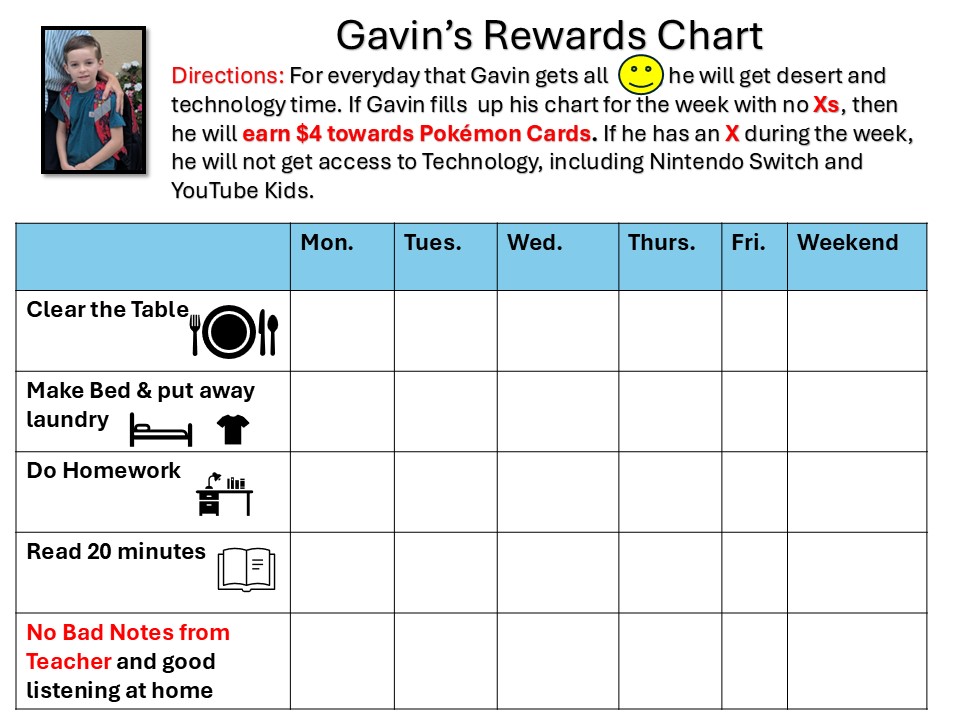
For my son’s chart, each week is worth $5 that he mostly wants to use to buy Pokémon cards. If he gets an “X” for classroom behavior during the week, however, he loses technology for an entire weekend. It’s a big consequence for him, but behavior in school is a BIG deal for me as a mom. For you too I’m guess as well.
4. Incorporate Movement Breaks
Children with ADHD often struggle to sit still for long periods. Build in short, active breaks between tasks to help them release energy and reset their focus. Activities like jumping jacks, stretching, or a quick walk can make a big difference in their ability to stay engaged. Give them a task or even a chore, but if it’s a chore, such as picking up or making their bed, make sure to incorporate the reinforcement into them completing the task or chore.
5. Set Realistic Expectations
Adjust your expectations based on your child’s needs and abilities. Recognize that their “best” effort may look different from another child’s. Celebrate effort and progress rather than perfection, and collaborate with teachers to ensure assignments are appropriate for their level. I’ve helped many student with IEPs and 504 Plans get the accommodation of having a parent sign off when the student has worked on their homework to the best of their ability for an hour…that’s it.
This really helps with students who have ADHD and can spend the entire evening agonizing and feeling like a failure that they can’t complete all of their math problems due to lack of focus. They focused ALL DAY LONG in school. Homework is meant to be a reinforcement of learning in the day, not a method of torture for children who are struggling to learn or sustain attention beyond the school day.
Homework should, therefore, not take children or any age more than one hour for elementary children, or two hours for Middle School. High School may be an exception on occasion, but not every night. Your child will be burned out of school if this is their situation, which may have big repercussions down the road.
6. Provide Clear and Simple Instructions
Children with processing difficulties may struggle with complex or vague directions. Break down instructions into clear, concise steps. Write them down if necessary, re-read the instructions if needed, and check in periodically to ensure they understand what’s expected. While it’s not your job as the parent to do all of their homework with them, and definitely not for them, doing the first problem together or helping study for a test is going to help your child be more successful on tackling their homework.
7. Minimize Distractions

Create a workspace that limits distractions, such as TVs, phones, or siblings playing nearby. Use tools like noise-canceling headphones, fidget items, or a visual timer to help them stay on task. The fewer distractions, the easier it will be for them to focus.
And doing homework on their bed is a definite “no-no”. While younger siblings may cause distractions outside of their bedroom, having a small work table, clipboard, or desk will be best. Beds equal nap-time. They will make a child with the best intentions get way too unfocused…and sleepy.
If they don’t have room for a desk in their bedroom, then enforcing a quiet hour in the house with no technology use by any siblings will help create a homework environment, whether it’s in the kitchen or at the dining room table.
8. Stay Calm and Supportive

When children become emotional or defiant, it’s important to remain calm. Acknowledge their feelings and offer support without giving in to the temptation to argue or escalate the situation. For instance, say, “I see this is hard for you. Let’s take a short break and try again.”
Helping your child feel that you are on their side will help improve their motivation and your relationship. You are the good guy! Communicating that you are on their side and only want them to have a successful life as an adult. That is the goal after all…to have self-sufficient adult children who contribute positively to society and can be self-sufficient. Education and self-discipline are the biggest factors that will contribute to that goal. Without it, you may be supporting your children in one way or another as adults!
9. Offer Choices

Empower your child by giving them some control over their homework routine. For example, ask if they’d prefer to start with math or reading, or whether they want a snack before or after homework. Offering choices can reduce power struggles and help them feel more in control. Sometimes it’s best to get the hard stuff out of the way. And sometimes it’s best to get the easy stuff done before tackling the hard stuff or studying for a test. If the choice is theirs, it might decrease the battle.
10. Collaborate with Teachers or Specialists
If homework challenges persist, reach out to your child’s teacher, school psychologist, or a learning specialist. They can provide insights into your child’s needs, offer accommodations, or suggest alternative assignments. For children with disabilities, ensure they have an appropriate 504 Plan or IEP in place to support their learning.
By implementing these strategies, you can create a more positive and productive homework environment, tailored to your child’s unique needs. Patience and consistency are key, and with time, they’ll gain the confidence and skills to tackle their assignments more independently.
If you have a child with a disability or suspected disability that is resulting in difficulties learning, completing homework, or emotional or behavioral difficulties, then consider a FREE consultation with a Licensed Educational Psychologist at SoCal Educational Evaluations. We offer consultation for parents who are struggling with the IEP process with their child’s school or have children with behavioral difficulties at school and at home. We can support you in your parenting journey!