If you’ve ever searched “why do I panic before tests?” or “how do I stop test anxiety,” you are not alone.
Test anxiety is one of the most common academic struggles for students of all ages—from middle school through college and professional exams.
And here’s the most important thing to know right away:
Test anxiety is not a sign that you are not smart. It is a stress response that shows up when something feels important.
The good news? Once you understand what test anxiety is, why it happens, and how to manage it, you can absolutely improve your confidence and performance.
Let’s break it down in a simple, clear way.
What Is Test Anxiety? (Simple Definition)

Test anxiety is a type of performance anxiety that happens specifically in testing situations.
It can affect your:
- Thoughts (worry, overthinking, “blanking out”)
- Body (sweating, racing heart, nausea)
- Behavior (procrastination, avoidance, freezing during tests)
Even when students know the material, test anxiety can make it difficult to show what they actually know.
Test Anxiety Symptoms: What It Feels Like
Many students search for “test anxiety symptoms” because it can feel confusing or even scary.
Physical symptoms:
- Racing heartbeat
- Stomachaches or nausea
- Headaches
- Sweaty hands
- Shaky or tense muscles
Emotional symptoms:
- Nervousness before or during tests
- Feeling overwhelmed
- Fear of failure
- Irritability or panic
Cognitive symptoms:
- “Blank mind” during tests
- Negative thoughts (“I’m going to fail”)
- Trouble focusing
- Second-guessing answers
If this sounds familiar, you are not alone—and more importantly, there are effective ways to improve it.
What Causes Test Anxiety? (Common Triggers)
Test anxiety usually comes from a combination of pressure, thinking patterns, and past experiences.
1. Fear of failure
When the outcome feels high-stakes (grades, college, scholarships), anxiety increases.
2. Perfectionism
Some students feel anything less than perfect is unacceptable, which creates pressure.
3. Lack of confidence
Even well-prepared students can feel unprepared.
4. Past negative test experiences
One difficult exam can shape future anxiety.
5. Time pressure
Timed tests can trigger stress responses even when students know the content.
6. Negative self-talk
Thoughts like:
- “I always mess this up”
- “I’m not good at tests”
- “I’m going to fail”
These thoughts increase anxiety and reduce focus.
How to Overcome Test Anxiety: Proven Strategies That Work
The goal is not to eliminate all anxiety.
The goal is to manage it so it doesn’t control you.
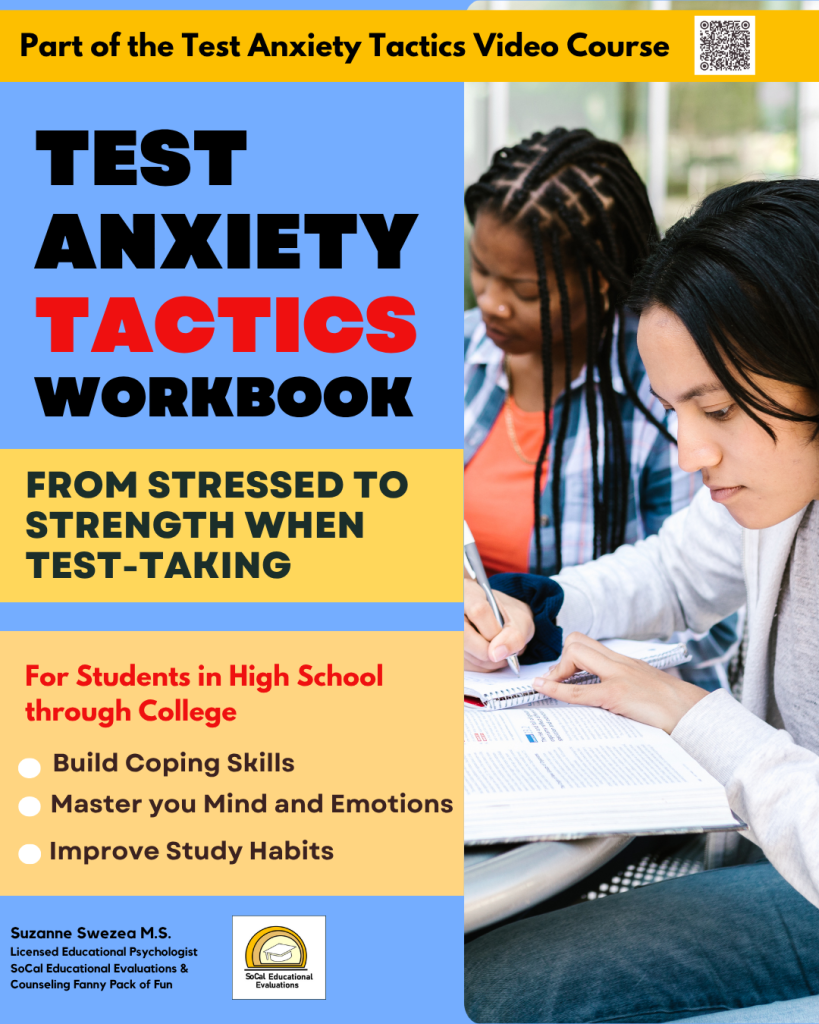
That’s exactly where the Test Anxiety Tactics Course comes in. It isn’t a “magic fix” or a quick solution that makes worries disappear overnight. Instead, it’s a step-by-step guide designed to help students understand what test anxiety is, recognize how it shows up for them personally, and learn how to work with it instead of against it.
Inside the course, students learn how to apply research-based strategies in real time—especially in the moments that matter most, like during an exam. The focus is on building practical, repeatable skills that reduce symptoms and improve confidence under pressure.
Here are research-supported strategies taught in the Test Anxiety Tactics Course that help:
1. Replace perfection with preparation
Instead of:
“I need to know everything.”
Try:
“I need to be more prepared than I was yesterday.”
Small steps build confidence.
2. Calm your body before your mind
Try:
- Slow breathing (inhale 4, exhale 6)
- Grounding techniques (5-4-3-2-1 method)
- Muscle relaxation
A calm body helps a calm brain.
3. Reframe negative thoughts
Instead of:
“I’m going to fail.”
Try:
“I can handle this one question at a time.”
You don’t need perfect confidence—just balanced thinking.
4. Practice under real test conditions
Take practice tests with:
- Time limits
- Quiet environment
- No distractions
This trains your brain to stay calm under pressure.
5. Build a pre-test routine
A consistent routine reduces uncertainty:
- Sleep well the night before
- Eat something stable
- Arrive early
- Use breathing strategies before starting
Routine = reduced anxiety.
When Test Anxiety Becomes a Bigger Problem
If test anxiety is affecting:
- Grades
- Sleep
- Confidence
- Or your ability to show what you know
It may be time to learn to use more structured support tools.
Many students try to “push through” anxiety without realizing that anxiety management skills—not just effort—are what make the difference. These skills can support not only your exams, but any moment of pressure of stress in your career and future.
A Real Solution: Learn How to Manage Test Anxiety for Good
If you’re tired of:
- Freezing during tests
- Going blank even when you studied
- Overthinking every question
- Feeling overwhelmed before exams
You don’t need more random tips.
You need a system.
That’s why I created the Test Anxiety Tactics Course.
Inside the course, you’ll learn how to:
- Calm your body quickly before and during tests
- Stop negative thinking loops
- Study in ways that actually reduce anxiety
- Build long-term confidence for exams and life situations
This is not just test support.
It’s a lifelong skill-building system that helps with:
- Exams
- Presentations
- Interviews
- High-pressure situations in adulthood
? If you’re ready to stop struggling with test anxiety and start feeling more in control, you can enroll in the Test Anxiety Tactics Course. LINK HERE!
Final Thoughts: You Are Not Your Anxiety
Test anxiety does not mean you are incapable or unprepared. It means your brain is reacting to something that matters to you. And that matters. Because it means you care about your future. The goal is not to eliminate anxiety completely.
The goal is to learn how to move through it with confidence, clarity, and control.
And when you learn that skill, everything changes—not just your test scores, but your self-belief.
Printable Workbook Now Available on Amazon.com